
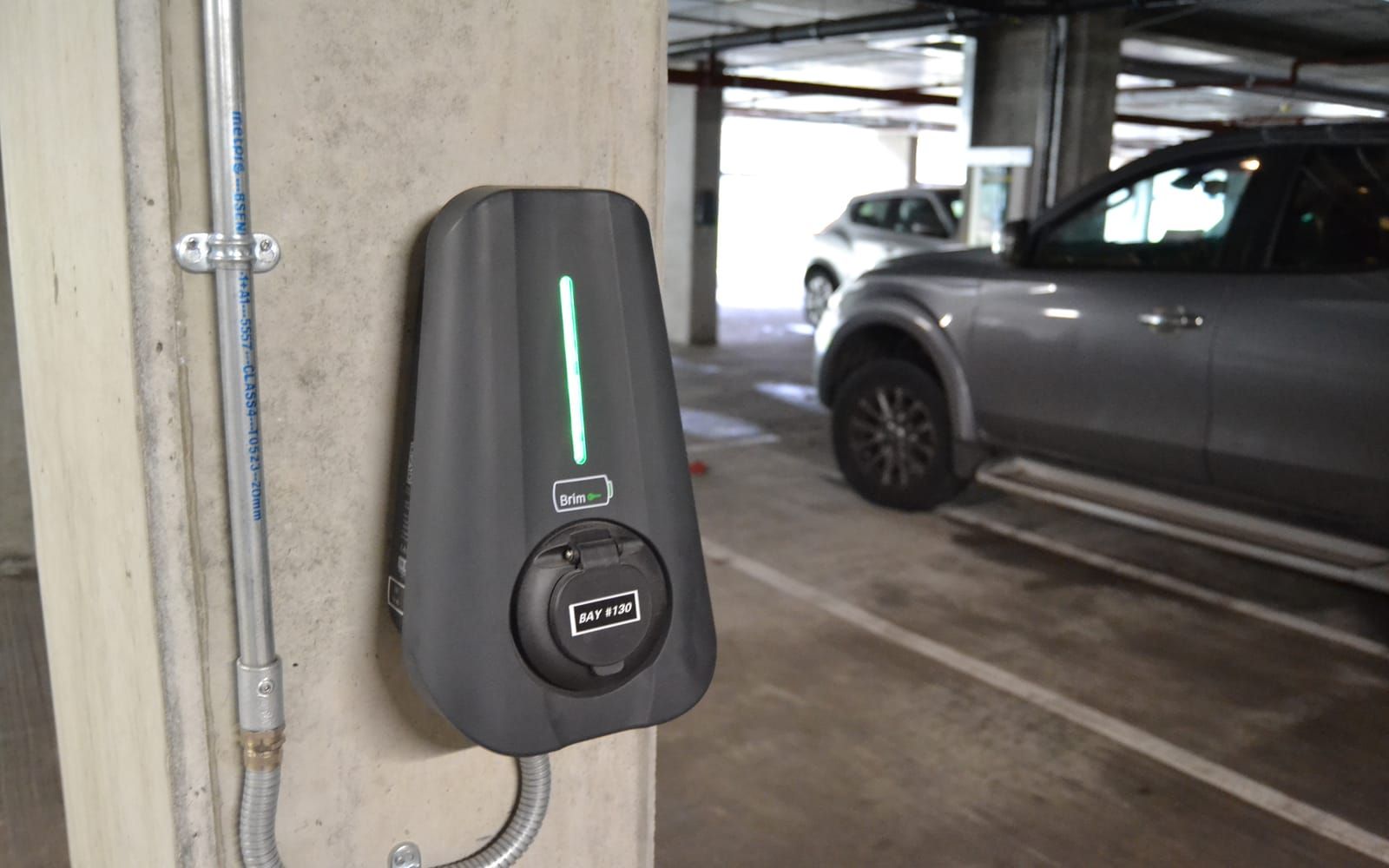
Managing agents taking over a residential block or estate increasingly inherit EV chargers that were fitted during the build, and sometimes already live. Since Part S made chargepoints a condition of building a home in England, homebuilders fit them as standard. The handover pack rarely says who runs them.
Once the developer has gone, the work is management: who can plug in, what they pay, how the electricity is recovered and how one supply is shared between the cars. The fix is the same in every case: put the chargers on a management platform. Five questions tell you what you have, and whichever brand is on the wall, nothing has to come off it.
Key takeaways
- Chargers fitted under Part S arrive with the block. A charger that is live with no tariff set is building up an unrecovered electricity cost on the landlord supply every day.
- Five questions cover the audit: how many and where, what brand, how the electricity is supplied, whether a platform account already exists, and whether anyone is paying.
- Ofgem’s maximum resale price has not applied to EV chargepoints since April 2014, but a 2025 call for input asks whether it should. The outcome is pending.
- A charger management contract running more than 12 months may be a qualifying long-term agreement under Section 20. Take advice before signing.
- A hardware-agnostic platform runs any OCPP 1.6 or 2.0 charger, so a non-standard unit is onboarded, not replaced.
How it happens
Why managing agents inherit chargers
The stock managing agents look after is large, flatted and growing. England has 4.90 million leasehold dwellings, and 69% of them are flats (MHCLG, May 2026). New-build completions added 190,600 more in 2024-25 (MHCLG, November 2025).
Every one of those new-build homes with associated parking has fallen under Part S since June 2022, so the chargers arrive with the block. Residents expect to use them. In a Which? survey of 1,004 EV and plug-in hybrid owners, 96% charge at home at least sometimes (Which?, February 2024). A block that cannot offer home charging is a block with a complaint waiting.
Several national housebuilders now fit the same universal smart charger across their developments, with a platform behind it ready to activate. The handover is where it goes quiet: the charger is on the wall, and nobody has been told the account exists.
What goes wrong
What goes wrong with inherited chargers
An inherited charger is usually in one of two states, and both cost money. Either it is live with no tariff set up, so residents charge on the landlord supply and nobody recovers the cost, or it is locked and nobody on site can activate it, so residents with an EV cannot use the bay they were sold.
In both states the agent has no visibility. There is no record of who is plugging in, how much electricity is being drawn, or what the communal supply is carrying at seven in the evening. On a block where the chargers share one metered supply, that last point matters most: unmanaged chargers on a communal car park feeder run straight into the capacity the site was designed with, and load management is what keeps them inside it.
Neither state fixes itself with a change of agent. There is no EV-specific handover standard for the agent to lean on, so the five questions below are the checklist, and the answers are what make onboarding quick.
Five questions
Five questions to work out what you’ve inherited
Work through these before calling anyone. Most of the answers are in the O&M manual, the handover file or a walk round the car park, and together they are the whole brief for whoever takes the chargers on.
| Question | Why it matters | Where to look |
|---|---|---|
| 1. How many chargers, and where? | Driveways, allocated bays and communal bays each need a different access setup: private to the plot, one designated user, or open to whoever the site allows. | The site plan, the O&M manual, a walk round the car park |
| 2. What brand and model? | Decides the route in, not whether it is possible. Any OCPP 1.6 or 2.0 charger can be brought onto a platform. | The label on the unit, the handover documents, the electrical certificate |
| 3. How is the electricity supplied? | A landlord supply recovered through the service charge, usage billed per session, and an individual meter per plot are three different billing models. | The metering schedule, the supply contract, the meter cupboard |
| 4. Is there an existing platform or account? | The chargers may already sit on a portal in the developer’s name. If so, the account needs transferring, not rebuilding. | The developer’s site team, the previous agent, the QR code on the charger |
| 5. Is anyone being charged for electricity now? | If the chargers are live and no tariff is set, an unrecovered cost has been building on the landlord supply since the first resident plugged in. | The landlord supply bills, the previous agent’s service charge accounts |
Question three decides the rest. On a communal supply, billing settles each session to the resident who used it. A private driveway charger runs on the homeowner’s own meter and needs nothing from the agent except the warranty, which follows the plot to the homeowner.
The rules that apply
Resale price, Section 20 and the grant
Three pieces of regulation sit around a charger on a block, and two of them are commonly misread.
On grants, the residential landlord chargepoint grant runs to 31 March 2027 at 75% of cost up to £500 per socket, up to 200 sockets a year. The residential car-park infrastructure grant closed to applications on 31 March 2026 (DfT and OZEV, July 2026). Chargers already on the wall have already been paid for; the grant matters where a block is adding sockets to the cable routes Part S left in.
What good looks like
What a management platform has to do
Whatever is on the wall, the platform is what turns inherited hardware into a service the agent does not have to think about. Six jobs, and it has to do all of them.
Access
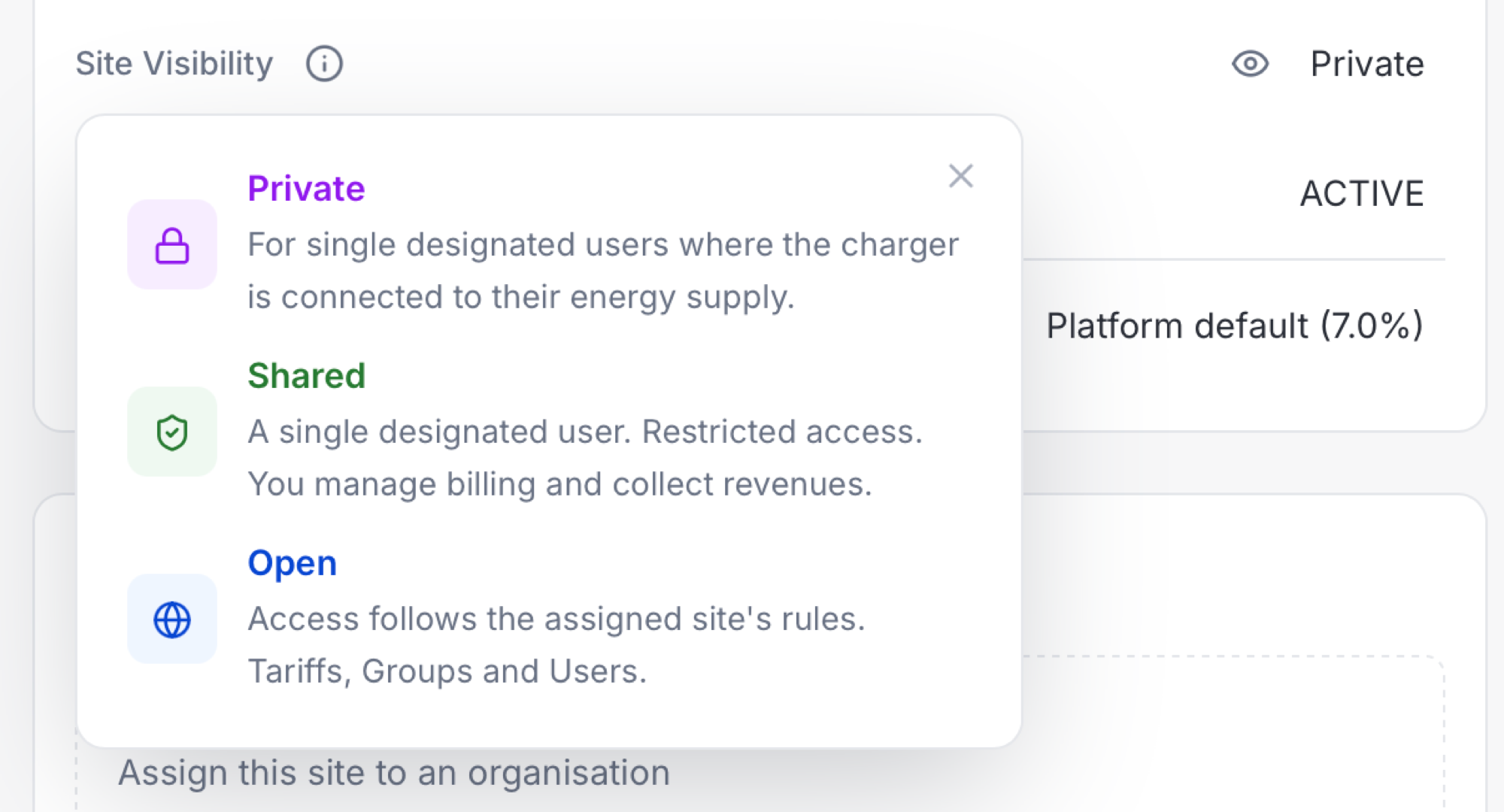
Each charger set to private, shared or open, with residents, permit holders, staff and visitors held in their own driver groups. A driver is added or removed from the portal without a visit to the charger.
Tariffs
A rate per group, set centrally and changed centrally. If Ofgem’s review changes what can be charged, the tariff changes once, not charger by charger.
Billing
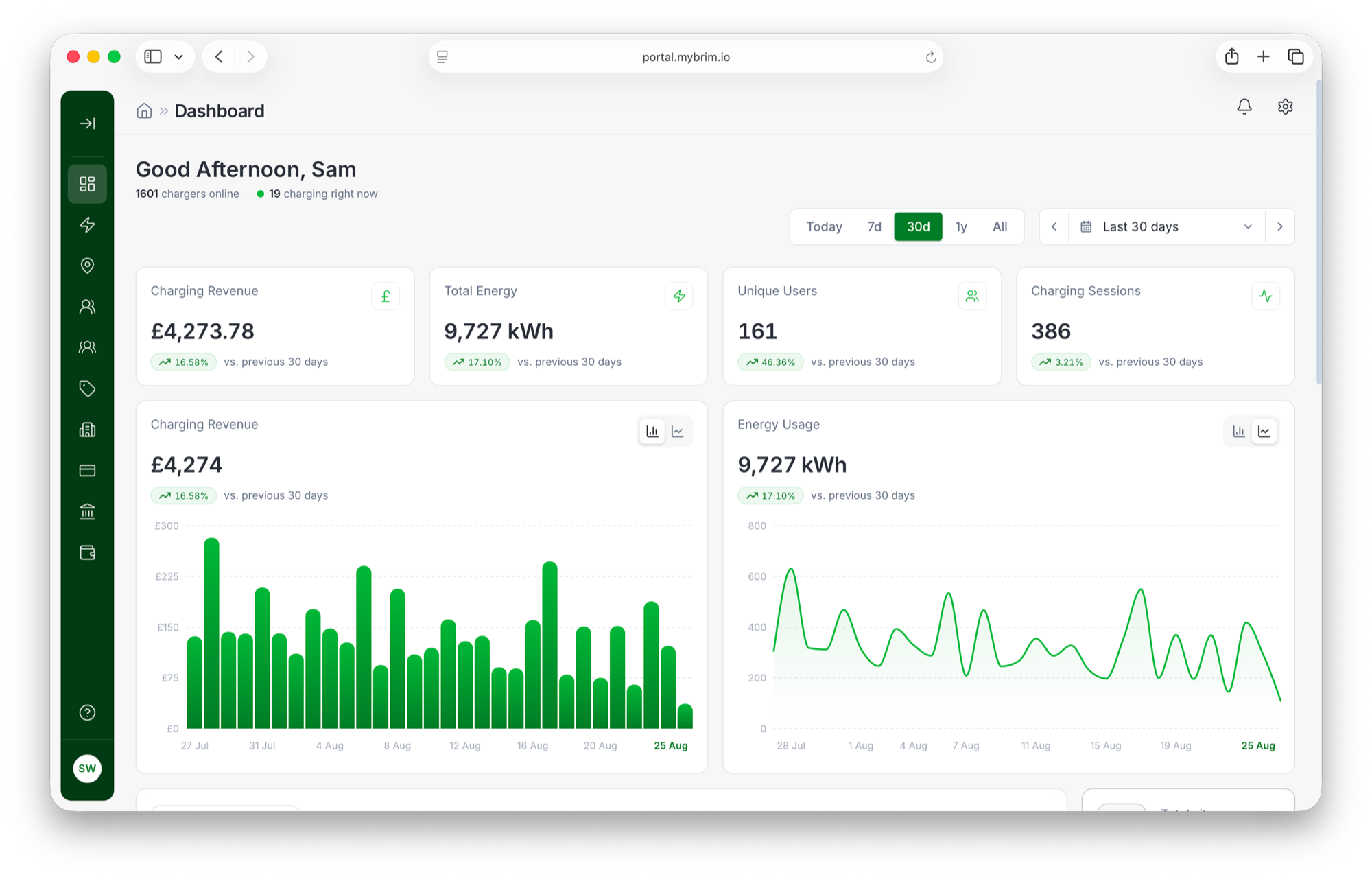
Each session settled to the resident who used it, with one monthly settlement per site. The transaction fee and management charge are itemised, and the statement, invoices and payout receipt download VAT-correct.
Reporting
Live activity across every site and every charger, so the agent can answer who used what and when without a site visit.
Load management
One supply shared between the cars actually drawing, so a block of chargers stays inside the capacity the substation gave it.
Driver support
A 24/7 UK phone line for every resident, plus live chat on the website and in the app, so the first call about a charger does not come to the agent’s office.
The route in depends on what the audit found. Developments from Persimmon, Bellway, Fairview, Taylor Wimpey, Vistry, Weston Homes and Thakeham Homes typically come fitted with the Brim 7.4 kW universal charger, which arrives pre-commissioned with the platform behind it. Anything else is onboarded rather than replaced.
| Route in | The chargers are Brim units | The chargers are another brand |
|---|---|---|
| What is needed | The platform behind them is already there. It needs activating in the agent’s name. | Nothing comes off the wall. The portal runs any OCPP 1.6 or 2.0 charger. |
| What to send | The site address, the developer, a rough count, and whether residents are already using them. | Brand, model, connectivity (Wi-Fi, 4G or Ethernet) and a rough count. |
| What happens next | Access, tariffs, billing, reporting and load management are switched on. Many of these sites need load management to stay inside the substation capacity. | The chargers are pointed at the portal (see OCPP takeover), then set up the same way. |
Either way, driver groups put residents, permit holders and visitors on their own access and rates, and driver support takes the resident calls. As more developments arrive with chargers as standard, this becomes a bigger part of block and estate management. Getting it right at handover means fewer resident complaints later.
Questions
Frequently asked questions
Do we need to replace chargers that are not the standard unit?
No. The portal runs any OCPP 1.6 or 2.0 charger, so an inherited unit from another manufacturer is onboarded, not replaced. OCPP takeover covers how a charger is pointed at a new platform without coming off the wall.
Can we recover the electricity cost through the service charge?
It depends on the supply arrangement found in question three. Where residents are billed per session, Ofgem decided in 2014 that the maximum resale price does not apply to EV chargepoints (Ofgem decision, 2014), though a 2025 call for input has asked whether it should, and the outcome is pending. Where the cost sits on the landlord supply, apportion it as any other communal cost and take advice on Section 20 for the management contract.
Is there a grant for chargers on a block?
The residential landlord chargepoint grant runs to 31 March 2027 at 75% of cost up to £500 per socket, up to 200 sockets a year (DfT and OZEV, July 2026). It is relevant where a block is adding sockets to Part S cable routes rather than to units already fitted. The residential car-park infrastructure grant closed to applications on 31 March 2026.
What do we send to start onboarding?
For the standard housebuilder unit: the site address, the developer and a rough count. For any other brand: the brand, model, connectivity and a rough count. Either way, the answers to the five questions above are the whole brief.
Next step
Get the inherited chargers onto the portal
Send us the answers to the five questions, or just the site address and a photo of one charger, and we will tell you what is on the wall and what it takes to activate it. Chargers of any OCPP 1.6 or 2.0 brand go onto the portal alongside the standard units, with access, tariffs, billing and load management set up per site. Email plugmein@fulltothebrim.com, call +44 (0)20 7097 5911, or use the contact page.